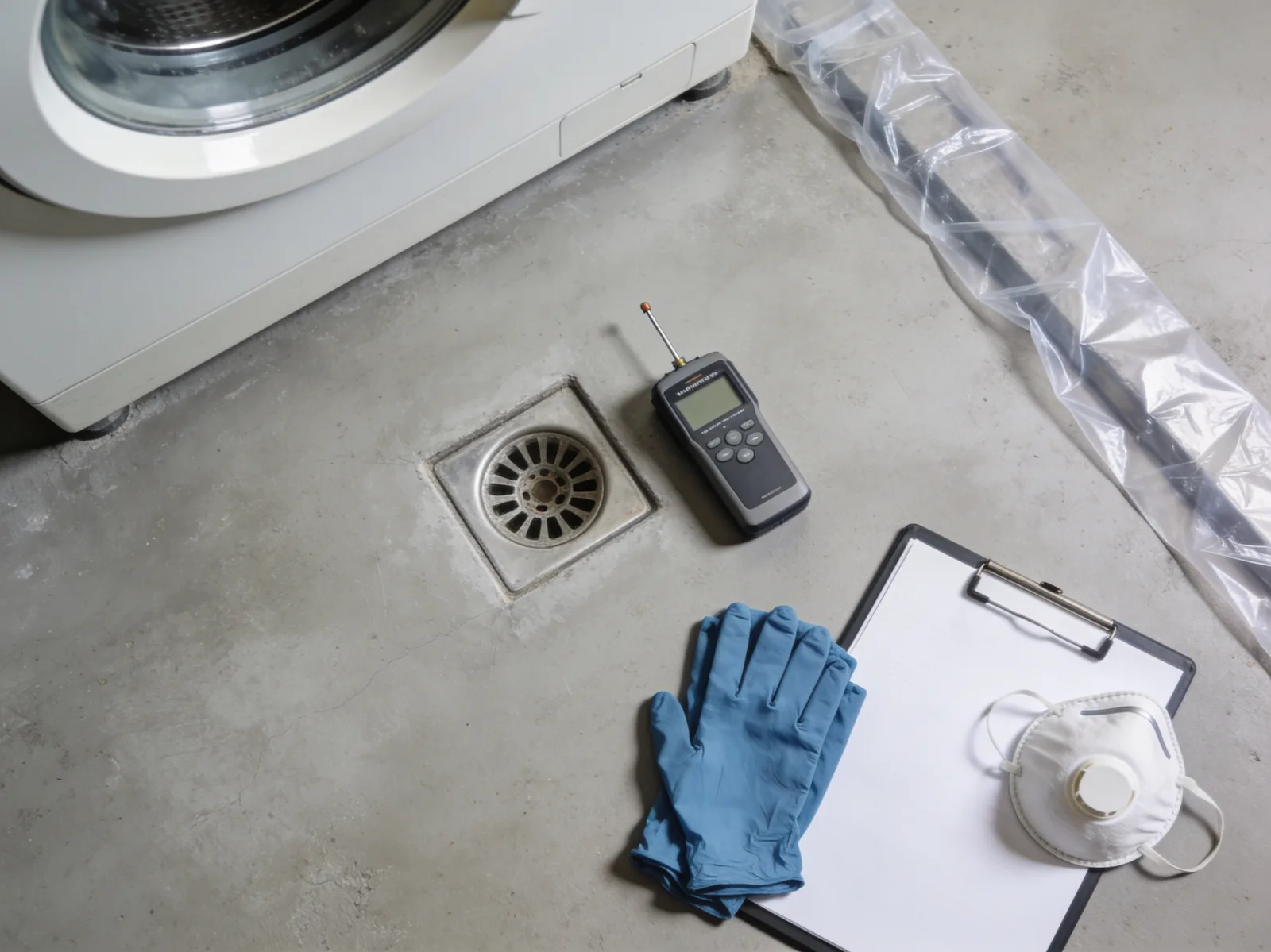
Basements take the brunt of most sewage backups because they sit below the rest of the plumbing. The water finds the floor drain, the basement toilet or the laundry standpipe, and from there it spreads across the slab. Basement sewage cleanup in Grinnell, IA looks very different depending on whether the space is bare concrete or finished living area, and we connect you with local crews that handle both.
Unfinished basements
A bare concrete basement is the easier case. The crew pumps out the water, removes the sludge, scrubs the slab and foundation walls, and applies disinfectant with the proper contact time. Things stored on the floor are the main loss: cardboard boxes, rugs, paper and fabric usually go. Plastic bins, metal shelving and tools can often be cleaned. Wooden stairs and the bottom plate of any framed walls get checked with a moisture meter. Even in a bare basement, a dehumidifier usually runs for a few days afterward, because concrete holds water longer than it looks.
Finished basements
Finished space is where the cost climbs. Carpet and pad sit directly on the slab and soak up sewage fast. Drywall wicks water upward. Insulation in the walls holds moisture for a long time. A typical finished basement job includes:
- Pulling carpet, pad and tack strip
- Removing baseboards and making a flood cut on the drywall
- Bagging wet insulation from the wall cavities
- Removing laminate or vinyl plank if water got underneath
- Disinfecting the slab, studs and bottom plates
- Drying with air movers and dehumidifiers for several days
The wall work is explained in detail under drywall removal after a backup.
Mechanical equipment
Furnaces, water heaters and washers often sit in basements. If sewage reached them, have the right trade look at the equipment before you use it, especially anything with burners or electrical parts near the floor. Leave the electrical panel alone if you have to stand in water to reach it. Ductwork that runs along the floor or has returns near it may also need a look.
Why it keeps happening
Basements that back up more than once usually have a line problem: roots, a sagging pipe, or a city main that surcharges in storms. A plumber can camera the line, and some homeowners add a backwater valve. Most backups come in through the drain in the slab, which is covered on our page for floor drain backup cleanup, and the city side is covered under sewer backup cleanup.
Keep children and pets out of the basement and wear boots and gloves if you have to go down. Call (217) 404-1483 and we will connect you with a crew that does basement sewage cleanup in Grinnell, IA.